

Can A Pool Sand Filter Be Left Empty When Not In Use
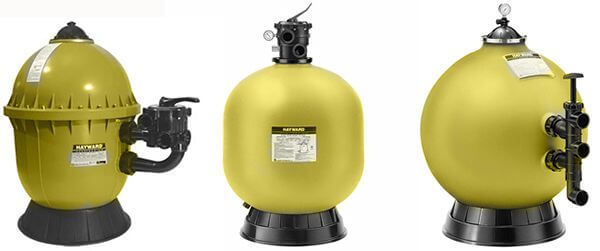
Your pond pool filter is one half of the nearly important equipment needed to keep your h2o looking fresh and clean. Yous want pool h2o that sparkles, which ways the filter needs to exist kept in optimum working condition. As with the pool pump, pool filter issues need to be fixed quickly, to forbid algae growth.
Today we await at some common Sand Pool Filter Bug to lookout for, and how to fix your own sand filter trouble, with just basic hand tools, and in some cases a few sand filter parts.
ane. WATER LEAKING OUT OF WASTE LINE
A filter'due south Multiport Valve is a complex piece of the filter so keeping an eye on it throughout the season is to your advantage. There are over a dozen parts within a multiport valve, and multiple ports for the water to menstruum, hence the name.Push-pull valves, mounted on the side of a sand filter, are simpler, with but two ports for filtering or backwashing.
After yous finish backwashing information technology is not unusual to notice a little stream of water continuing to come up out the backwash line. Jiggle the handle, and if there'due south still h2o coming out minutes afterwards that signifies a problem with the valve. The bulk of the time leaks such as this are from a bad spider gasket on a multiport valve, or plunger o-rings on a push-pull valve. A spider gasket seals up the ports (including the waste water port) to command the direction of your pool water.
Through normal use the gasket rubber will wear down and somewhen allow water or debris to bypass the intended management and escape out the backwash port, or return to the puddle unfiltered. Turning the valve while the filter is running can also disrupt the seal. it is worth noting that sometimes the gasket only needs to be cleaned up, reset and lubed.
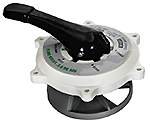 To inspect or repair a leaking multiport valve, turn off power to your pump and release the pressure in the filter, then remove the screws on top of the valve. Now you tin lift out the cover, handle and key stem all in one slice (this is called the key stem associates). The spider gasket will exist sitting within the trunk of the valve. Clean it off and check for any tears or twisting, or other signs of damage. It can be replaced by lifting out the old gasket with a pocket-sized, sharp screwdriver, then gluing in the exact replacement spider gasket (apartment side down, ridged side up).
 On some valves, similar the Hayward SP714T, the spider gasket is glued into the bottom of the diverter, rather than inside grooves of the valve body. Leaking out the backwash line on this type of valve is more than likely to be broken spring on the diverter stem, or debris stuck inside of the valve.
2. Dirt COMING BACK INTO THE POOL
Sand filters tin can pass some small debris back into the pool, and information technology tin be considered normal, especially if you are vacuuming fine, silty dirt. You may see a stream coming back in through the return lines, during vacuuming, or correct after backwashing. Vacuuming to waste will prepare the sometime, and using the Rinse setting after backwashing volition ready the latter.
There are other ways to amend the effectiveness of sand filters, such equally using a Puddle Clarifier to improve water clarity with a sand filter, and using a Sand Filter Cleaner regularly to refresh the sand and remove oils and calibration (and clarifier!). The Slime Bag is a mesh bag that you attach to your return line wall plumbing equipment, that acts equally a secondary filter to trap very tiny particles.
- Worn-Out Sand. Over time the sharp edges wear downward, and dirt holding chapters goes down.
- Calcified Sand. Very difficult h2o minerals can turn filter sand into kind of a sandstone.
- Mudballing. Oils collect in a sand tank, making gooey balls of gunk in the summit third of the sand.
- Channelling. If the pump is too powerful for the filter, information technology can force water through unfiltered.
- Bypassing. The filter valve could exist bypassing dirt, from a too powerful pump, or bad spider gasket or valve spring.
3. BROKEN MULTIPORT HANDLE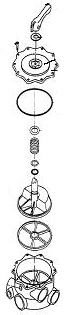
Using too much forcefulness, or large tree branches tin intermission the handle on top of a multiport valve. If the handle has a lot of movement in it, or is real floppy, yous may take to replace the spring within the primal stalk assembly. In this example, it may be better to replace the key assembly; it'due south definitely a lot easier.
To supersede just the handle, remove the key stem assembly equally described in a higher place, and place information technology on a soft surface where you can utilise pressure to the pinnacle cover (compressing the spring) and remove the pivot that runs through the handle past tapping it out. Once the handle is off, check the big nylon washers that lie underneath information technology inside the middle of the tiptop embrace; information technology tin can crack over fourth dimension and this too can disrupt proper handle function. There are also o-rings on the stem that goes through the lid. Clean and/or supplant any valve parts that need replacement, and so put dorsum it all back together, beingness conscientious to supervene upon the lid in the exact aforementioned orientation over the diverter, so that everything lines upward correctly.
4. LEAKY FILTER TANK
This one's fifty-fifty easier…it is not rubber to repair a croaky tank. You need to purchase a new 1, and it'south unremarkably cheaper to buy an entire new filter than to but buy the tank. Patching a pressure tank like a sand filter volition always fail, and the eventual rupture could drain the pool or injure someone standing nearby. There are other sand filter leaks that tin can be stock-still notwithstanding, with the right filter parts.
- Leaking air bleeder. Typically an o-band or some Teflon tape will seal these up.
- Leaking drain assembly. The drain plug or cap tin lose an o-band or gasket.
- Leaking flange assembly. Superlative mount valves seal upwardly to the tank with an o-ring and a tight clench.
- Leaking bulkheads. Side mount valves have bulkheads on the tank with many spacers and gaskets.
- Leaks where the pipes connect into valve. Cracks from over-tight fittings.
SAND IN THE Puddle?
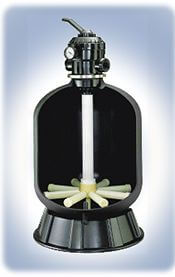 Broken Laterals? If your sand filter is leaking sand, into the pool, constantly (not just subsequently backwashing), this is usually a cleaved lateral. Laterals are plastic parts at the bottom of the sand filter, with slits so pocket-size that it keeps out sand grains, until information technology cracks that is. Information technology could likewise be a broken standpipe or diffuser – all internal parts that crack can leak sand into the pool.
You may see a brusque cloud of dusty sand right after backwashing, but when a lateral bursts, you volition know it. Several handfuls of sand or even much more will be on the floor below the returns.
The solution? Drain the tank, scoop out the sand, and supervene upon the entire ready of laterals. You can reuse the filter sand if it's withal in good shape. Generally, pool filter sand lasts virtually 5-vii years earlier it wears out and needs to be replaced (except for very small filters used on aboveground pools, which usually need new sand much sooner.
5. HIGH FILTER Pressure
A sand filter needs backwashing when the pressure gauge reads 8-10 lbs higher than the pressure later cleaning. When you lot backwash, h2o goes through the filter tank backwards, hence the name. Backwashing for 3-5 minutes flushes out the dirt from the sand bed and out the waste line or hose. 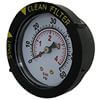
"Normal" sand filter pressure? Something around 10 psi isusual, but it depends on the pump size, pipe size and resistance from the other equipment that y'all have. Every pool has different system pressure level gauge readings, a normal filter force per unit area could exist annihilation from 5-25 psi. "High" filter pressure is anything above 30 psi.
The rule of thumb is that if pressure is higher than normal it's a dirty filter, and if information technology'south lower than normal, information technology'southward a dirty pump basket (or impeller). Just what is happening when you lot backwash the filter and the pressure gauge remains high? Here'due south some things to check.
- Bad Sand, or oily, gunky sand. Replace sand or use sand filter cleaner.
- Bad gauge. Does information technology go to zero when the pump shuts off? It could be stuck.
- Obstacle after the filter. Partially closed valve, plugged or clogged lines.
- Obstruction before the filter. Poor h2o flow into the filter.
- Multiport valve recirculating water, reducing backwash water flow.
Sand pool filter repairs are Urgent , you've got to become the water filtering again fast. If you lot tin't filter the h2o while awaiting sand filter parts, you lot may be able to at least broadcast the water, by using the filter featherbed setting, Recirculate. Keep the chlorine level high past calculation granular pool shock, and castor and skim the pool daily until you can make the filter repair.
Give u.s. a call if you lot desire to discuss your sand filter problems – ask for me, or whatsoever of the other ITS Pool Experts!

Can A Pool Sand Filter Be Left Empty When Not In Use,
Source: https://blog.intheswim.com/top-5-swimming-pool-sand-filter-problems/
Posted by: kellyeldis1975.blogspot.com
0 Response to "Can A Pool Sand Filter Be Left Empty When Not In Use"
Post a Comment