

How Much Of Animal Products Is In A School Lunch
In that location has been an explosion of interest since the New York Urban center Department of Education (DOE) began rolling out Vegan Friday meals for students on Feb seven. Pundits are rushing to the nearest microphone to yell about it, declaring: Anarchy! Socialism! And this isn't vegan at all (considering they offer milk to students per USDA dietary guidelines)! And they're correct, it is a big bargain for the largest schoolhouse organisation in America, at just shy of 1 one thousand thousand students, to make such a big change. This modify, however, isn't as big every bit the reactionaries would have us believe. And it could atomic number 82 to some major changes in sustainable eating.
I wish my school tiffin carte du jour had more diversity, or enough to model how to eat vegan, vegetarian, or flexitarian. Growing up in a small town in Texas, there were two meals I knew I could count on from our school cafeteria: a Grandy's-style chicken fried steak with mashed potatoes and green beans on Tuesdays and pizza (always dunked in a side of ranch dressing) with a salad on Fridays. Both were served upwards like clockwork, creating almost Pavlovian hunger cues that normalized these comfort foods as go-tos for me. I tin can still olfactory property those meals and remember how they tasted, even though I oasis't had them in 25 years. Even so, I'm difficult-pressed to recall any school meals that I, every bit an developed, would consider good for you—let solitary fresh and sustainable.
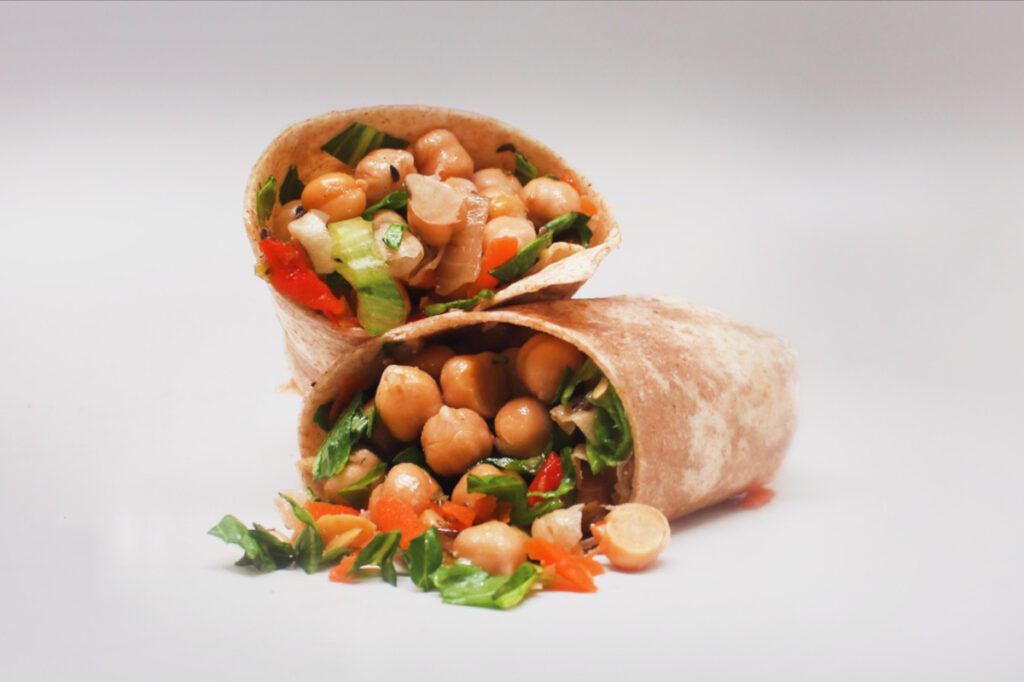
The program in NYC is getting mixed reviews—from glowing to GAH! But this isn't the first time school districts take instituted institute-based eating. Since 2017, they take been a regular part of school nutrition. Information technology'southward been available to students and, in fact, is a way to slowly innovate sustainable changes well across school. Great, right? And so why all the hububub at present? It's in the branding.
The evolution of healthy school food
Trends have changed in schoolhouse lunches. Chef Jamie Oliver ready out to make school lunches healthy and fresh in the United kingdom of great britain and northern ireland in 2003 and brought his revolution to the U.S. in 2010. And so-president and first lady Barack and Michelle Obama started the Allow's Move! program to battle babyhood obesity and ended up passing the Healthy, Hunger-Complimentary Kids Act of 2010 to assist schoolhouse meals grab upwardly to modernistic USDA dietary suggestions. That alter in standards required more whole grains, increased the portion size for fruits and vegetables—and required the pick of a fruit or vegetable—limited starchy vegetables, and shifted mandated milk consumption to low-fat or no-fat milk only.
Jessica Ramos, who represents District 13, including Jackson Heights and Elmhurst, in the New York State Senate, tweeted out a photo of her child's schoolhouse tiffin along with her critique, calling the program "not thought through." Hopefully, that'southward something the DOE can correct as they piece of work with certified dietitians and professional chefs to develop the menu, although it seems similar having vegan options on offer all along would make the schools more well-prepared for the shift. The Vegan Friday meals that are currently on the weekly carte du jour take been taste-tested by small groups of students, the DOE says, and menus are made available online a month ahead of time and so students and their families tin plan appropriately to opt-out if information technology's non to the student's liking.
Mayor Eric Adams may flip-flop on his own plant-based nutrition, but he spearheaded the district's implementation of Meatless Mondays in 2019 and its extension to Meatless Fridays in 2021.
"Plant-based options in schools means salubrious eating and salubrious living, and improving the quality of life for thousands of New York Urban center students," Mayor Adams told LIVEKINDLY in a statement. "Plant-based meals are succulent and nutritious, which is why I previously chosen for vegetarian and vegan options in schools. I'm thrilled to encounter that all students will now accept access to healthy foods that will prevent debilitating health conditions."
Sustainability enters the conversation
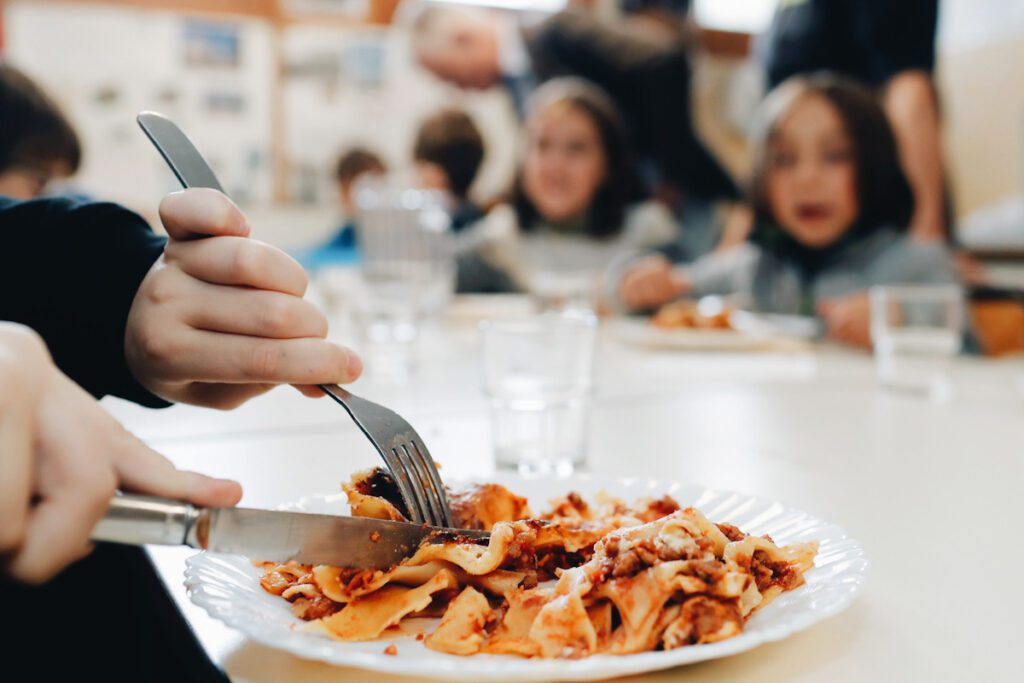
What Adams, who famously credits his mostly institute-based diet with reversing his diabetes diagnosis, is getting at is that offering students options can bring about incremental modify. It can be the kickoff step for many on the road to a healthier, longer life. It can also mean that as these students plow into adults whose eating habits have been shaped by opening their palates to vegan options, normalizing vegan eating, that it can eventually change the style New York as a whole eats—including potentially reducing the carbon footprint of the largest city in the nation past consuming less meat.
For many kids, removing the barriers of entry to eating a plant-based—or at the very least nutritious—meal is the first pace to expanding their gustatory modality buds and putting them on the road to healthy and sustainable habits. And studies show that if you serve it, they will (somewhen) endeavour it. An evaluation of educatee food consumption in the American Journal of Preventitive Medicine constitute that when offered healthier options after the 2010 menu change passed by Congress, students opted for and consumed more fruit and more of the food on their plates overall.
Sustainability remains a challenge, however. The report notes that food waste from school lunches was significant before and after the nutrition recommendations were implemented, although not every bit widely reported through anecdotal evidence. The written report suggests that high vegetable and fruit waste levels deserve further inspection. It finds, "Schools must also focus on the quality and palatability of the fruits and vegetables offered and on creative methods to engage students to taste and participate in [the] option of menu items to subtract overall waste levels."
"The DOE is committed to the wellness and wellbeing of every kid, and having a consistent, nourishing and filling meal each 24-hour interval is essential in ensuring students tin succeed both inside and outside the classroom," Jenna Lyle, assistant press secretary for the NYC Section of Instruction, tells LIVEKINDLY in a argument. "Post-obit on the success of Meatless Mon and Fridays, we are excited to exist expanding access to salubrious and nutritious food options for NYC students with the phasing in of a vegan-focused menu on Fridays."
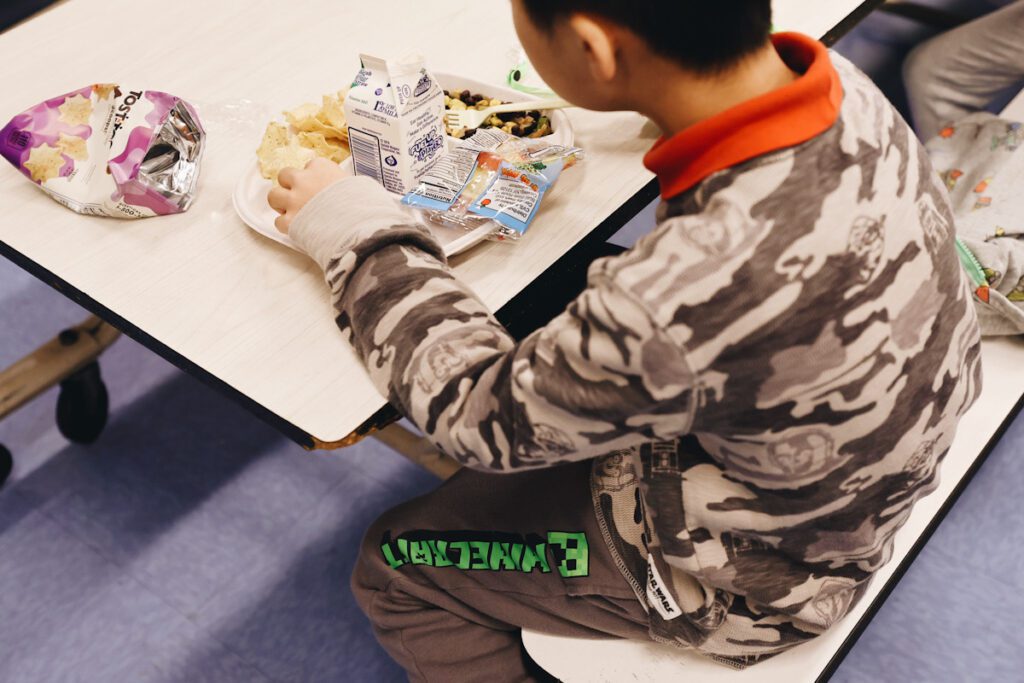
Accessibility is important and a key part of irresolute the eating habits of students. New York Metropolis introduced universal complimentary breakfast and dejeuner in 2017 to erase the stigma of subsidized lunches. Vegan options were already available to students on-demand, equally are halal and kosher meals. And we know that when the cafeteria lunch is free, more than students opt to eat information technology. That potentially increases the number of kids who could grow up to be adults who eat more sustainably because a flexitarian meal choice was bachelor to them.
The challenges for schools thinking of taking up vegan, vegetarian, and flexitarian menus don't stop there. Making these meals truly sustainable requires more than than switching upward which days meat is served. A study in Global Environmental Change highlights the massive impact that cutting meat consumption can offering; information technology plant that if the entire U.Due south. participated in a meatless day each week, greenhouse gas emissions could be cut by 22 percent. Imagine what that ways for even a portion of the country regularly participating in meat-complimentary days.
If that'due south not reason enough to switch kids to healthier repast choices, the Brookings Institute studied how the quality of school lunches impacted cognitive development and role for students. Looking at standardized test scores, students served a healthier lunch prepared by a individual outside company saw a 4 percent increment in their test scores. Students who qualified for a free or reduced tiffin improved their scores by 40 percent.
1 in four Americans are working on eating less meat, and most cite their health as the reason for making that choice.
Finally, there's the question of their health. The consumption of too much meat, dairy, and highly candy foods, are a factor in nationwide increases in diabetes, chronic illness including eye disease and loftier cholesterol, obesity, and the rising cost of healthcare.
"The earlier in life that we tin institute healthful eating habits, the better," says Eugenia Gianos, MD and Director of Cardiovascular Prevention for Northwell Health and Director of Women's Heart Wellness at Lenox Hill Hospital. She added her applause to the NYC Section of Eduction'south vegan Friday program, which she calls a positive step. "I run into our young people struggle with overweight, obesity, and even diabetes at younger and younger ages. Research shows that plant-based diets help people attain a healthy weight."
A report on plant-based diets aimed at physicians in The Permanente Journal found taking up a institute-based or even partly-constitute-based diet can address all of these. It further suggests encouraging doctors to motility away from language like "vegan" or "vegetarian" and instead talk about consuming healthy, whole, institute-based foods while minimizing eating meat, dairy, and eggs. That's a motility that's right on tendency with what a lot of people want: a Gallup poll from 2020 found that one in four Americans are working on eating less meat, and nigh cite their health as the reason for making that choice. Plant-based food products are also a growing business, with McDonald's and Burger King getting into the Incommunicable and Beyond Meat game and making a killing. The Good Food Found values it every bit a $7 billion market in which grocery store sales of plant-based foods that replaced animate being products grew 27 percent in 2021.
While NYC Vegan Fridays are not a perfect experience, with different schools conspicuously serving wildly different meals to meet the new requirements—some of which did not pass the muster of students or parents—it is an idea worth encouraging. When done correct, it can improve the health, learning ability, and eating habits we're teaching to children. When done every bit a chat with kids about what meals they enjoy, it can change the trajectory of how they eat for life.
Source: https://www.livekindly.co/vegan-school-lunches/
Posted by: kellyeldis1975.blogspot.com
0 Response to "How Much Of Animal Products Is In A School Lunch"
Post a Comment